San Francisco's Winning Formula Creates a Monday Night Passing-Yard Ceiling for Brock Purdy
Brock Purdy has helped San Francisco start 5-0 without needing heavy passing volume. Against Washington, the 49ers' offensive balance and potential game script create an opportunity to fade an elevated passing-yard total.
Brock Purdy Under 262.5 Passing Yards (-145) is the Monday night selection.
San Francisco enters Monday Night Football undefeated through five games, and Brock Purdy has been central to that success. But one of the most interesting aspects of the 49ers' offense is how efficiently it has operated without requiring its quarterback to consistently produce enormous passing totals.
Purdy has thrown for 1,196 yards through five games, averaging 239.2 per contest. More importantly, he has attempted just 28.4 passes per game, demonstrating how San Francisco has balanced quarterback efficiency with a productive rushing attack.
His last two performances illustrate that approach.
Against Denver, Purdy completed 19 of 30 passes for 218 yards and two touchdowns. One week later against Seattle, he completed 19 of 29 for 189 yards and another two scores.
The 49ers won both games.
Now San Francisco hosts a struggling Washington team as a substantial favorite, creating the possibility of another game in which the offense can generate points without relying on extended passing volume.
There is legitimate danger in this matchup. Washington's secondary has struggled, and Purdy has already demonstrated the ability to surpass 280 passing yards on relatively few attempts.
However, the combination of San Francisco's offensive structure, receiving injuries and favorable potential game script creates a reasonable argument for another performance below the elevated passing-yard threshold.
What the market is pricing
Brock Purdy's passing-yard market presents an important distinction between the available numbers.
The featured selection is Under 262.5 Passing Yards at -145, an alternate line that provides additional protection compared with lower passing-yard totals.
For readers whose sportsbooks do not offer that alternate market, Under 252.5 at -115 is the acceptable alternative.
The difference between those numbers matters.
Purdy has exceeded 262.5 passing yards twice this season, reaching 287 against Miami and 297 against Arizona. His other three performances finished at 205, 218 and 189 yards.
His season average sits at 239.2, below both highlighted numbers.
Markets move after publication
Use the Odds Board and Data Sheets for the latest verified price. This article preserves what the expert knew when it was published.
Worth the read?
Be the first to like this.
BetHackr discussion
Add context, challenge the read, and keep the discussion useful.
More from this expert, sport, and topic—ranked for relevance.
NFLFree read
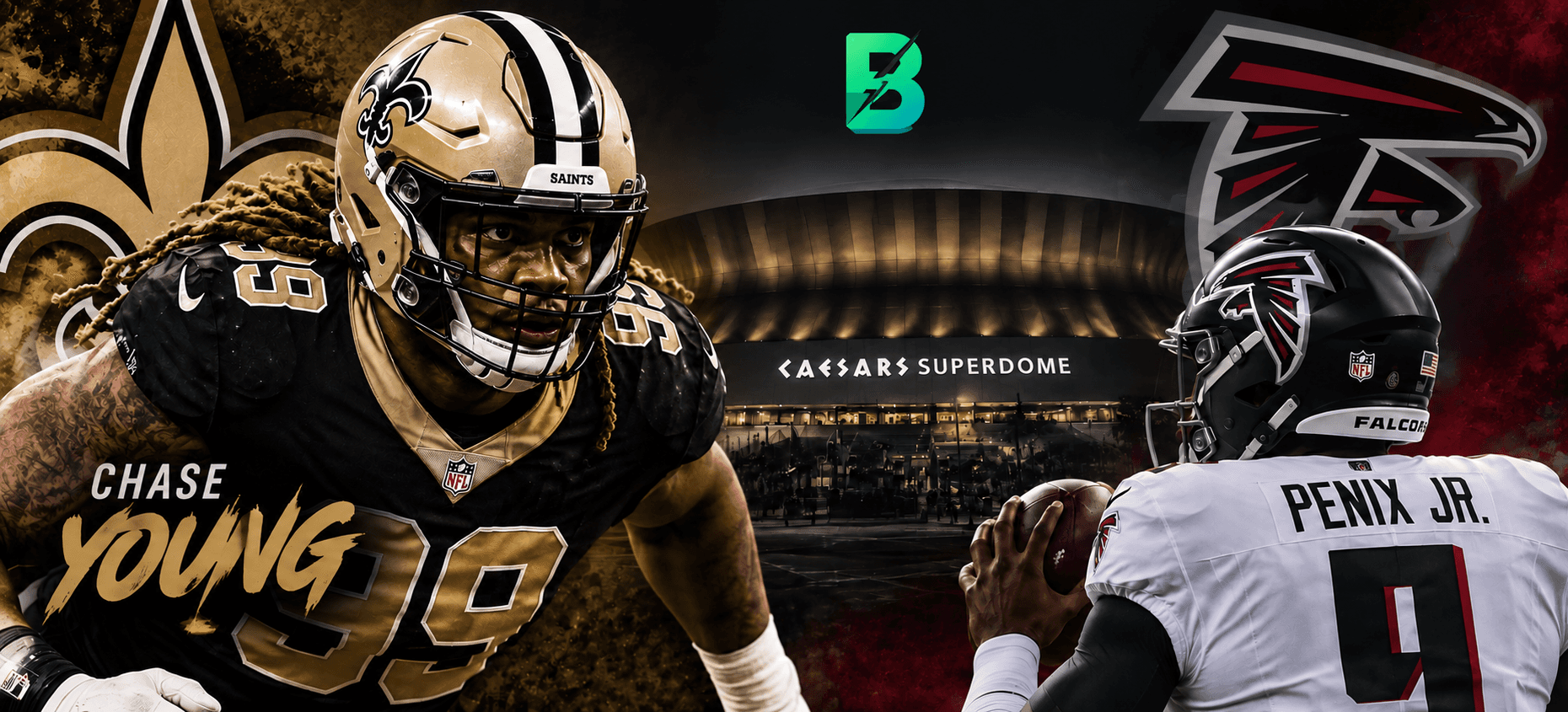
Chase Young’s Pass-Rush Surge Creates a Monday Night Sack Angle Against Atlanta
Chase Young enters Monday night with 3.5 sacks through three games and a market that only requires him to reach a half-sack to cash against Michael Penix Jr.
No guaranteed outcomes · Confirm current odds and eligibility · 18+ · If betting stops being fun, stop.
The market is balancing that relatively modest average against an exceptionally productive passing offense and a Washington defense that has struggled to contain opposing quarterbacks.
The Commanders have allowed several major passing performances, including 279 yards against Dallas, 393 against Seattle and 326 against the Giants.
Those numbers explain why Purdy's passing-yard markets deserve respect even when his recent workload has been limited.
But there is a crucial distinction between a defense allowing substantial passing production and San Francisco actually needing that production from its quarterback.
The 49ers have scored at least 24 points in every game this season. They have accomplished that while averaging fewer than 29 passing attempts from Purdy.
The offense has generated scoring opportunities through efficient throws, rushing production and favorable field position rather than relying exclusively on passing volume.
That is the central market argument.
Washington's defensive struggles create the potential for explosive plays, but San Francisco's offensive approach does not necessarily require a large accumulation of passing yards.
The higher alternate number provides room for Purdy to have a productive evening without needing him to struggle.
The matchup evidence
San Francisco's offensive efficiency has been remarkable through five games.
Purdy has completed 69% of his passes, averaged 8.4 yards per attempt and thrown 13 touchdown passes against just two interceptions.
Those are outstanding numbers, particularly for a quarterback averaging only 28.4 attempts.
But his recent game logs reveal an important pattern.
Against the Rams, Purdy threw for 205 yards in a 27-7 victory.
Against Denver, he produced 218 passing yards in a 24-14 win.
Against Seattle, he finished with 189 passing yards despite the 49ers scoring 32 points.
Across those three games, San Francisco found ways to win without requiring Purdy to approach 263 passing yards.
That offensive flexibility is one of Kyle Shanahan's greatest advantages.
The 49ers can attack defenses through multiple personnel packages, establish rushing opportunities and use play action to create favorable passing situations.
Christian McCaffrey remains central to that structure.
Through five games, McCaffrey has recorded 286 rushing yards on 61 carries, while Kaelon Black has contributed another 136 yards on 37 attempts.
Purdy has also contributed as a runner, accumulating 128 yards on 25 carries.
Overall, San Francisco has averaged approximately 28 rushing attempts per game, reflecting an offense capable of distributing its workload across both phases.
That balance becomes particularly important against Washington.
The Commanders have struggled to consistently finish defensive possessions, and their vulnerability to explosive plays gives San Francisco opportunities to generate offensive production without necessarily sustaining long passing sequences.
Washington has also relied heavily on defensive pressure.
The Commanders have blitzed on approximately 37.7% of opposing dropbacks, one of the highest rates in the NFL.
That approach creates opportunities to disrupt Purdy, but it also carries significant risk.
If San Francisco identifies the pressure before the snap, quick throws and yards after the catch could punish Washington for committing extra defenders.
The 49ers do not need Purdy to operate exclusively through deep passing plays to take advantage of that aggression.
Short completions, screens and throws into space can keep the offense productive while limiting the need for extended dropback sequences.
Personnel availability provides another consideration.
Deebo Samuel Sr. has been ruled out with a hamstring injury, removing a versatile receiving weapon from San Francisco's offense.
Samuel's absence matters because of his ability to create explosive yardage after the catch and contribute in multiple offensive roles.
Mike Evans is questionable with rib and Achilles concerns, while Christian Kirk is also questionable with a calf injury.
Both players could provide important receiving production if available, but the uncertainty creates questions about the overall composition of San Francisco's receiving group.
The potential absence or limitations of multiple receivers could encourage Shanahan to rely more heavily on his running backs, tight ends and controlled passing concepts.
There are also positive developments for San Francisco's offensive personnel.
Fullback Kyle Juszczyk is expected to return after missing the Seattle game, while McCaffrey and left tackle Trent Williams returned to full practice participation.
Juszczyk's return gives Shanahan another important piece for formations that support the running game and create opportunities through play action.
That matters because San Francisco does not need to abandon the passing attack to keep Purdy below the market's higher threshold.
The 49ers simply need to maintain enough balance that the quarterback is not repeatedly asked to carry the offense through the air.
Why game script matters
San Francisco enters Monday night as approximately a 7.5-point home favorite, with Washington arriving at 1-3-1.
That expected game environment provides another important part of the argument.
If the 49ers establish an early advantage, Shanahan has the personnel and offensive structure to control possessions through the running game.
San Francisco has already demonstrated that it can score efficiently without consistently asking Purdy to attempt 35 or 40 passes.
Against Miami, the 49ers scored 35 points while Purdy attempted only 22 passes.
Against Arizona, San Francisco scored 36 points on just 27 Purdy attempts.
Those games are also reminders of the danger involved in this market.
Purdy threw for 287 yards against Miami and 297 against Arizona despite those limited workloads.
An efficient quarterback facing a vulnerable secondary can accumulate substantial yardage quickly, particularly when explosive completions turn shorter drives into scoring opportunities.
That remains the largest statistical threat to the Under.
But Washington's offense also affects the expected game environment.
Jayden Daniels has returned to the starting lineup and gives the Commanders the ability to threaten defenses with both his arm and legs.
Washington has enough offensive talent to remain competitive, especially if Daniels successfully extends plays and prevents San Francisco from controlling field position.
The 49ers will also be without Nick Bosa, creating an additional challenge for their defense.
A competitive, high-scoring matchup would increase the likelihood of San Francisco leaning more heavily on Purdy.
Washington's defensive struggles could also force Shanahan into a more aggressive offensive approach if the Commanders begin scoring consistently.
However, the 49ers have demonstrated strong defensive production despite injuries and enter the matchup with opportunities to disrupt Washington's offensive possessions.
San Francisco recorded five sacks and four takeaways against Seattle, helping the team survive a challenging divisional matchup.
If that defensive pressure carries into Monday night, the 49ers could establish enough control to reduce the need for a high-volume passing performance.
The favorable scenario does not require a blowout.
It requires San Francisco to maintain offensive balance, avoid prolonged stretches of desperation passing and continue generating production through multiple phases.
Those conditions create a reasonable path for Purdy to finish below the featured number.
The decision
Brock Purdy Under 262.5 Passing Yards (-145) is the Monday night selection.
The argument is built around San Francisco's offensive structure rather than an expectation that Purdy will perform poorly.
Purdy has been one of the NFL's most efficient quarterbacks through five games, helping the 49ers remain undefeated while throwing 13 touchdowns.
But efficiency and passing-yard volume are not interchangeable.
San Francisco has repeatedly generated strong offensive production without needing its quarterback to surpass 263 passing yards.
Purdy enters averaging 239.2 passing yards and 28.4 attempts per game, while Shanahan continues to feature a balanced offense capable of controlling possessions through the running game.
The 49ers are substantial home favorites, and the expected return of Juszczyk provides another option for maintaining that offensive balance.
There are clear risks.
Washington's secondary has been vulnerable, Purdy has already produced two games above 280 yards on limited attempts, and Jayden Daniels could keep the matchup competitive enough to force additional passing opportunities.
Those concerns are why the alternate number matters.
At 262.5, the selection provides more room for an efficient Purdy performance without requiring an unusually poor offensive outing.
For readers without access to that alternate market, 252.5 remains an acceptable alternative at the specified price. Moving below that threshold, however, requires a different level of confidence in the passing-yard ceiling.
The opportunity is not based on San Francisco struggling offensively.
It is based on the 49ers continuing to win through the same balanced, efficient approach that has produced their undefeated start.
Official play and playable range
Featured play: Brock Purdy Under 262.5 Passing Yards (-145)
Preferred line: Under 262.5 at -145 or better.
Alternative for books without the preferred alternate line: Under 252.5 at -115 or better.
Pass point: Do not chase below 252.5 passing yards.
These are two specific playable combinations, not a blanket recommendation to take any available Under.
Risk check:
Washington has struggled against opposing passing attacks, surrendering multiple performances above 275 yards. Purdy has already thrown for 287 and 297 yards this season on just 22 and 27 attempts, respectively, demonstrating how quickly explosive plays can threaten this market. A Washington offensive surge, limited rushing success or repeated big completions against aggressive blitz packages could push Purdy beyond the target despite San Francisco's usual offensive balance.
·4 min
NFLFree read
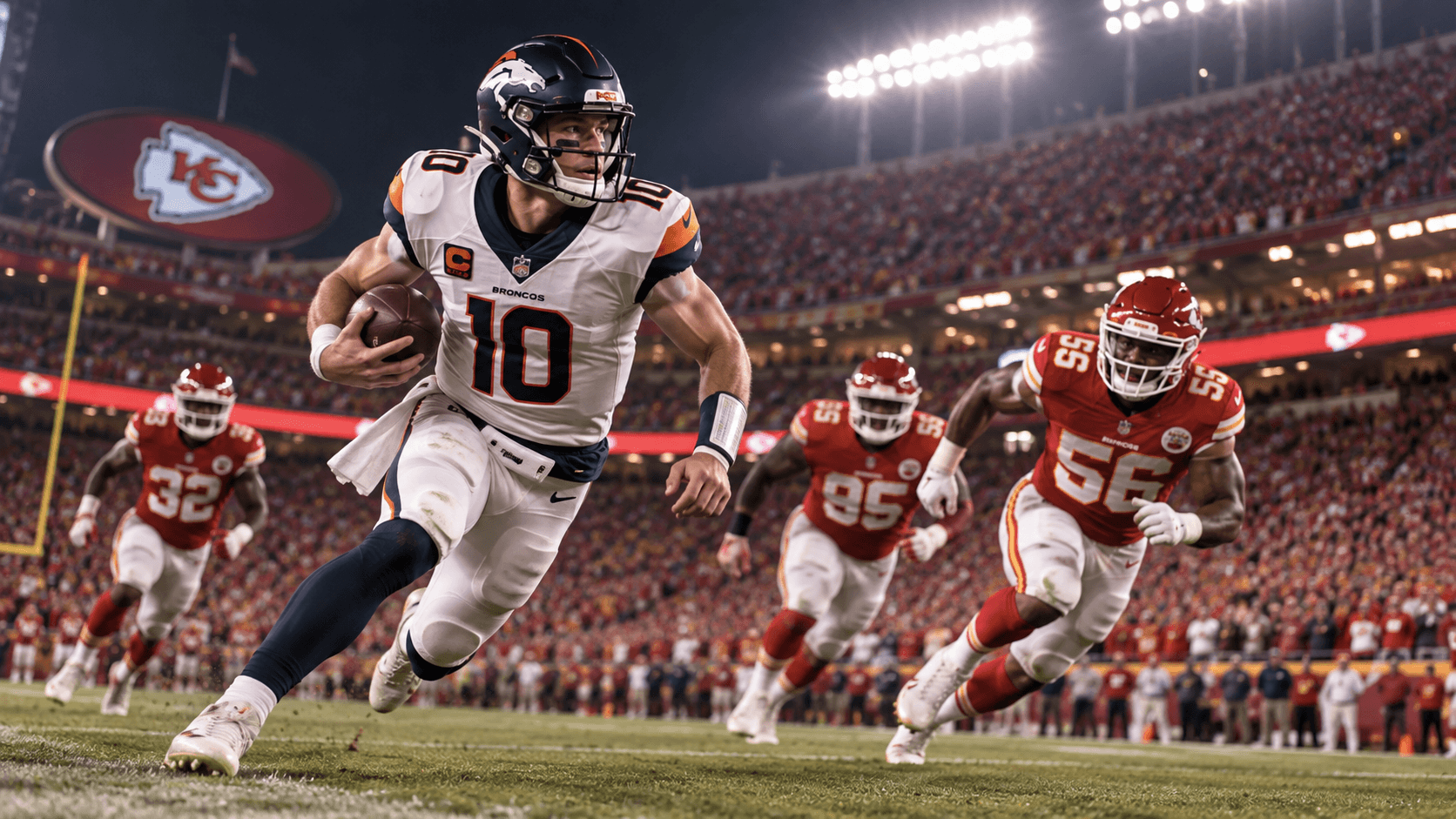
Why Bo Nix’s Legs Can Beat the Number at Arrowhead
Headline
Why Bo Nix’s Legs Can Beat the Number at Arrowhead
Deck
Kansas City’s pressure-heavy defensive approach creates the type of broken-play opportunities Bo Nix can exploit, making his 16.5 rushing-yard prop an appealing Monday Night Football angle even with the market already moving higher.
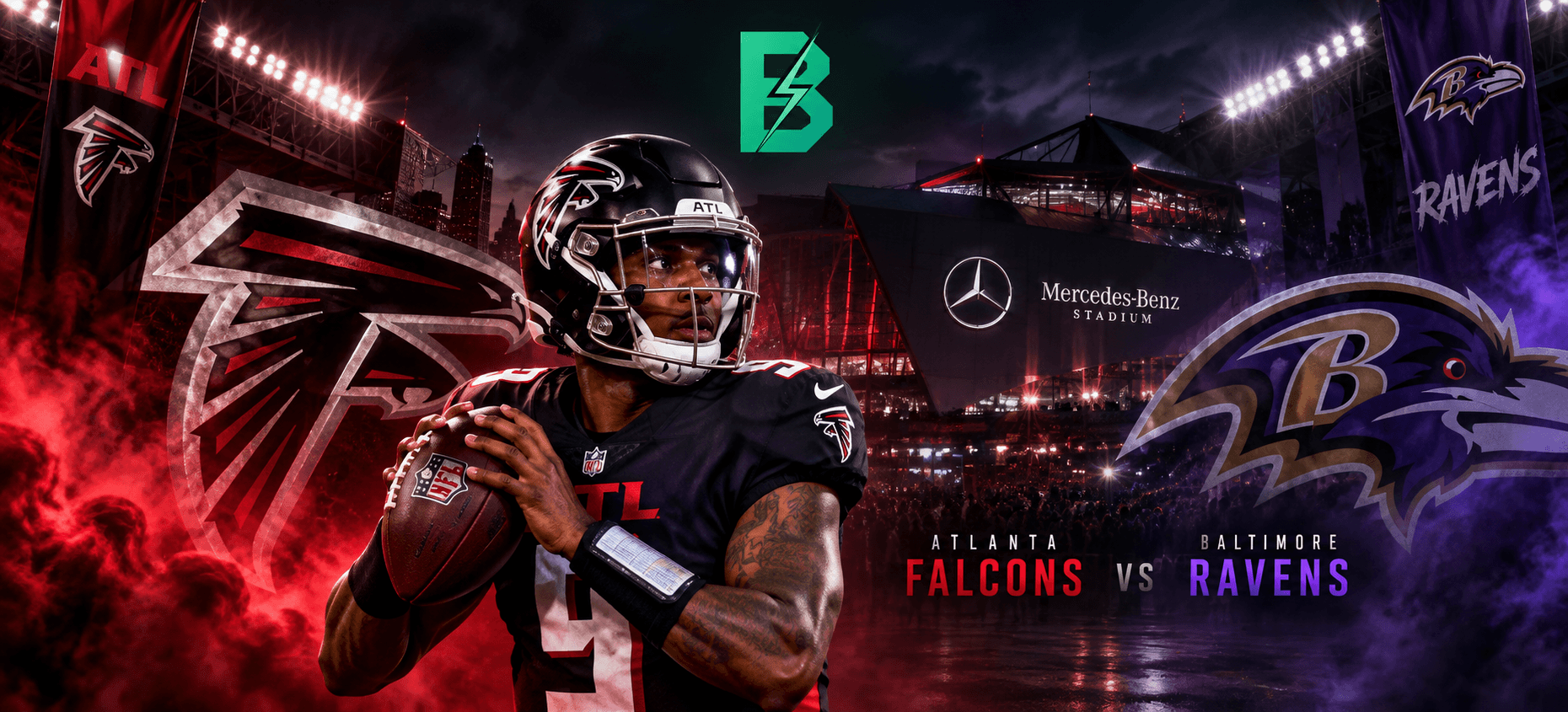
Atlanta’s Ground Game Creates a Sunday Night Passing Volume Ceiling for Michael Penix Jr.
Michael Penix Jr. has needed only 45 pass attempts to guide Atlanta to two dominant wins, and Baltimore’s quarterback situation could help keep the Falcons committed to their ground attack.